Data Driven Governance
Videos · Government, Technology
By Rishabh Srivastava, Founder of Loki.ai
This summary was largely done for my own note-taking, sharing it just in case it adds more value to other people.
I have no affiliation whatsoever with either the presenters or the organisers. This is a summary largely taken for my own reference, and may contain errors :)
Context
Source URL:
https://www.youtube.com/watch?v=daAJrunbvEQ
Why is it important: Governments (and all organizations) really, need to start using data if they want to make better decisions.
Keywords
Governance, Data Driven Government, Digital Transformation
Summary
...
Highlights
A. Continuously improve governance with data in British Columbia
By Jaimie Boyd, Chief Digital Officer at Government of British Columbia
How is data continuously improving the way we govern?
- Developed RPA for data input and management. Bots can help us scale quickly and effectively
- Data is helping improve project information around natural resources monitoring (oil) —> dashboards for environmental assessments and real-time monitoring
- Self-sovereign identity: leveraging blockchain solutions for identity
- Open data: making data available to everyone
When we drive data-driven digital services, we have an opportunity to reflect the values we have in public services
Need to get better at:
- Adopting best practices associated with digital governance
- User centricity and UI
- Agile procurement
- Standards (Data commons)
B. How is data continuously helping governance in Singapore
By Quek Su Lynn, Director of the Government Data Office, Smart Nation Digital Governance, Singapore
Government is placing a lot of emphasis on data.
Exponential growth in volume of data. Governments have enormous opportunities as a result of this
- Improve policies through evidence-based reviews
- Transform operational processes based on data
- Enhance and personalize service delivery to citizens
- Bolster external research to facilitate a robust research ecosystem that can help with public good (like public health research)
- Strengthen commercial interests to anchor a vibrant economy (like open data companies)
Vision: A Public Service that is "data-driven to the core"
- Empower each officer and agency to make full use of data to accomplish their tasks and missions
- Government is collectively able to use data to discover new insights and create new solutions to over binding constraints
Integrated Data Management Framework and Government Data Architecture
Aim: Reduce time taken for cross-agency data sharing from many months to seven days
Data Life cycle:
- Problem Statement: We need clarity on the issue being solved, and the AI and data applications being developed
- Data Acquisition: Acquire clean, verified, and authoritative data. Designate Single Sources of Truths for Core Data
- Data Fusion: Fuse data from multiple datasets into a single dataset supporting the desired use case. Trusted Centres for Individual, Business, Geospatial, and Sensor Data
- Access and Distribution: Securely and efficiently distribute datasets to authorised users. Central platform for accessing and distributing data securely
- Exploitation: Use datasets in secure environments (sandboxes) for authorised purposes. Central data exploitation environments
Used for:
- Policies & Governance
- People & Org Structures
- Systems & Infrastructures
Strong governance policies and security requirements underpin the use of data
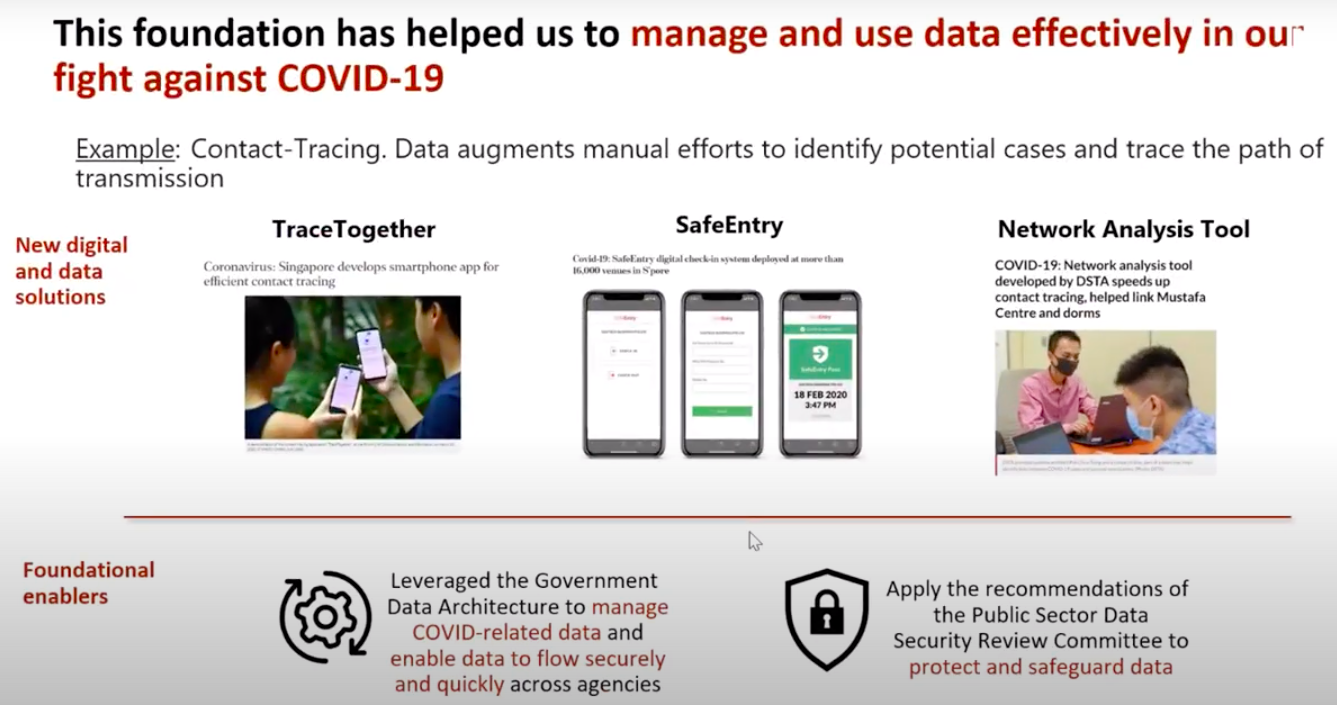
Public Sector Governance act: Criminalised misuse/unauthorised disclosure of data. Re-identified anonymised data by public officers
Public Sector Data Security Review: Set out recommendations to strengthen the public sector data security regime against emerging and future threats
Core goal: Creating processes and architectures for utilizing data while being protected against future threats
- Effectively protect data and prevent data compromises
- Detect and respond swiftly to data incidents if they to happen
- Have competent public officers embodying a culture of excellence in being sensitive to data security issues
- Demonstrate accountability for data protection at every level
- Have a sustainable and resilient strategy to meet emerging threats of the future
This foundation has really helped in managing Covid
C. Data as an accelerator for better governance and digital economy
By Lesly Goh, World Bank Senior Technology Advisor, former World Bank Group Chief Technology Officer
Pandemic heightened the important of a digital economy
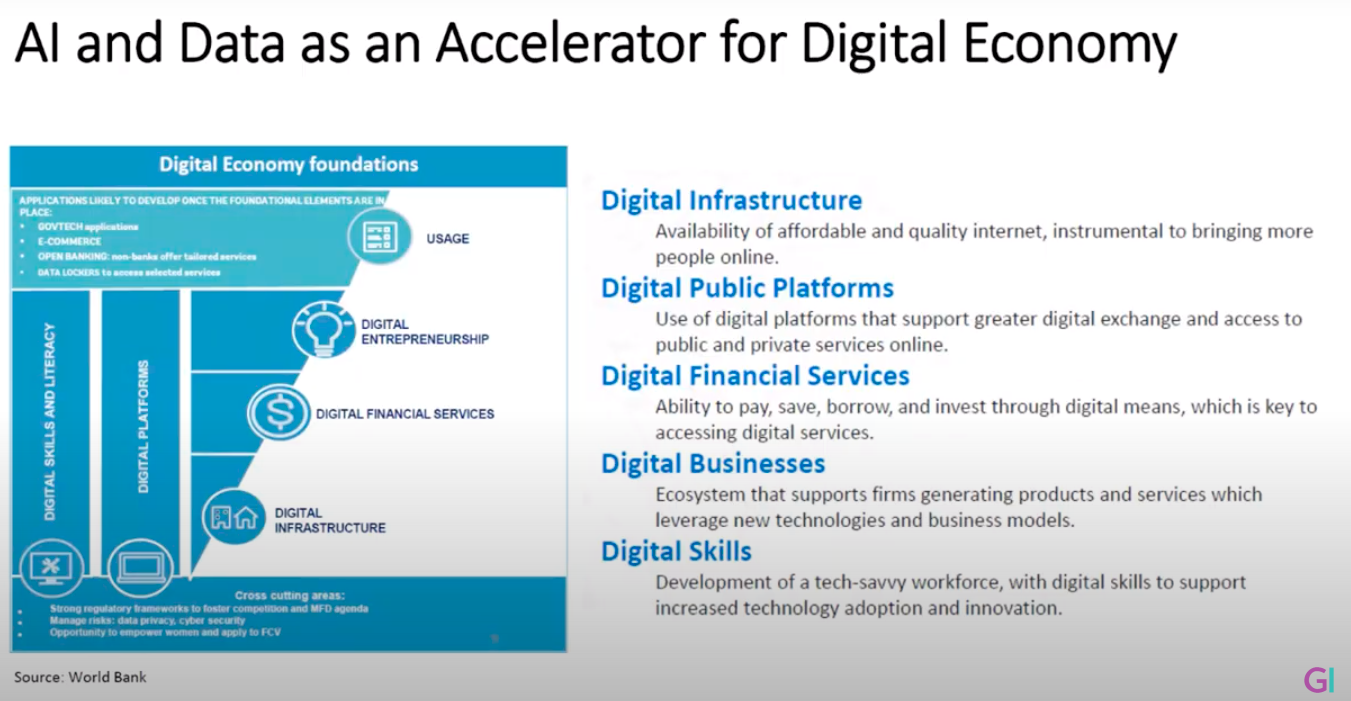
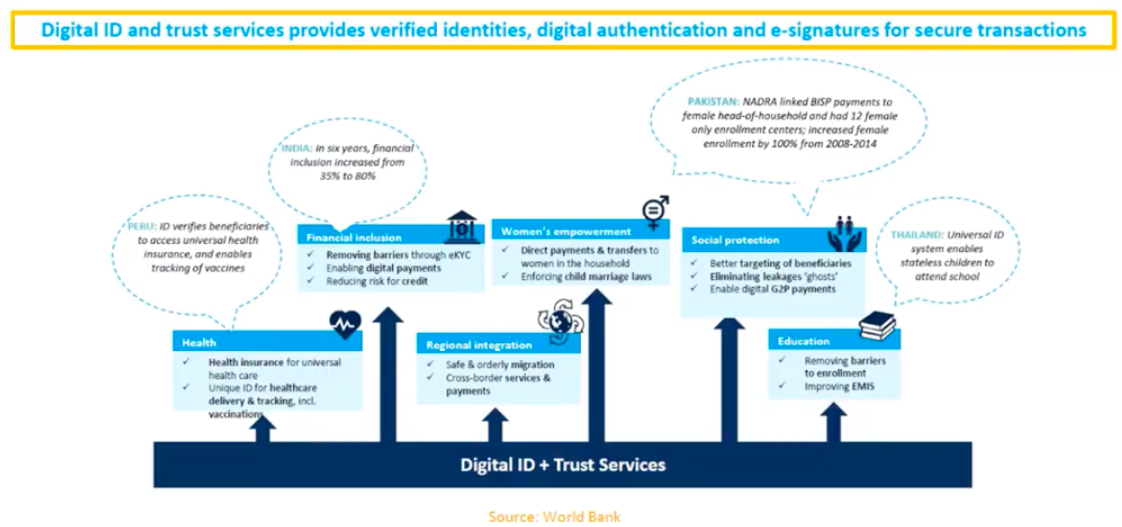
Trade and communications, routine businesses, agreements — all had to rely on online platforms. Needed trust to do this
Digital ID and trust is going to be key to this
Data governance has 4 components:
- WHAT information are you collecting?
- WHY are you collecting the data?
- WHO gets access to the data?
- HOW are you storing securely, using, sharing, and disposing the data
Digital Platforms and Data Governance
Collaborating with policy-makers: Opportunities to work together with policy-makers on the value of these databases and the importance of interoperability + data sharing, including cross border
Improved data inter-operability: Technical assistance on actually facilitating better interoperability of data. Demonstrate what's possible in terms of data exploration, analysis, and insights
Data standards, tools, automation: Technical assistance and advice on data standards, tools, and automation to overcome persistent challenges, such as manual data matching
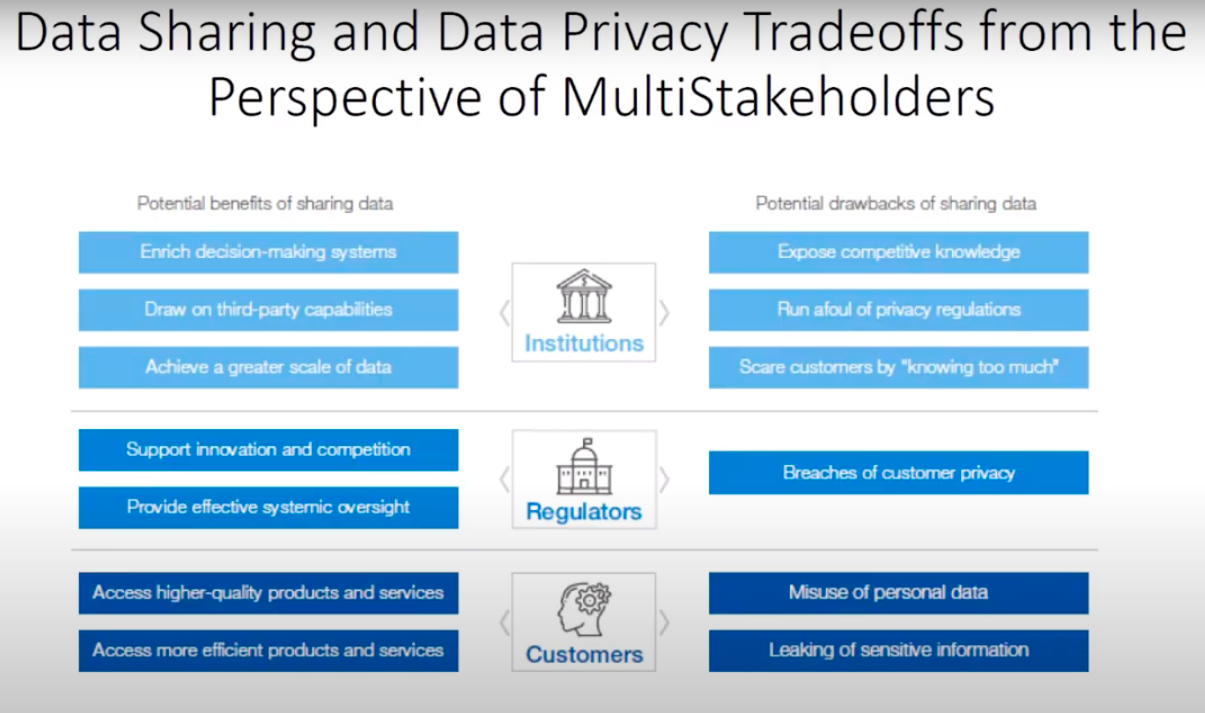
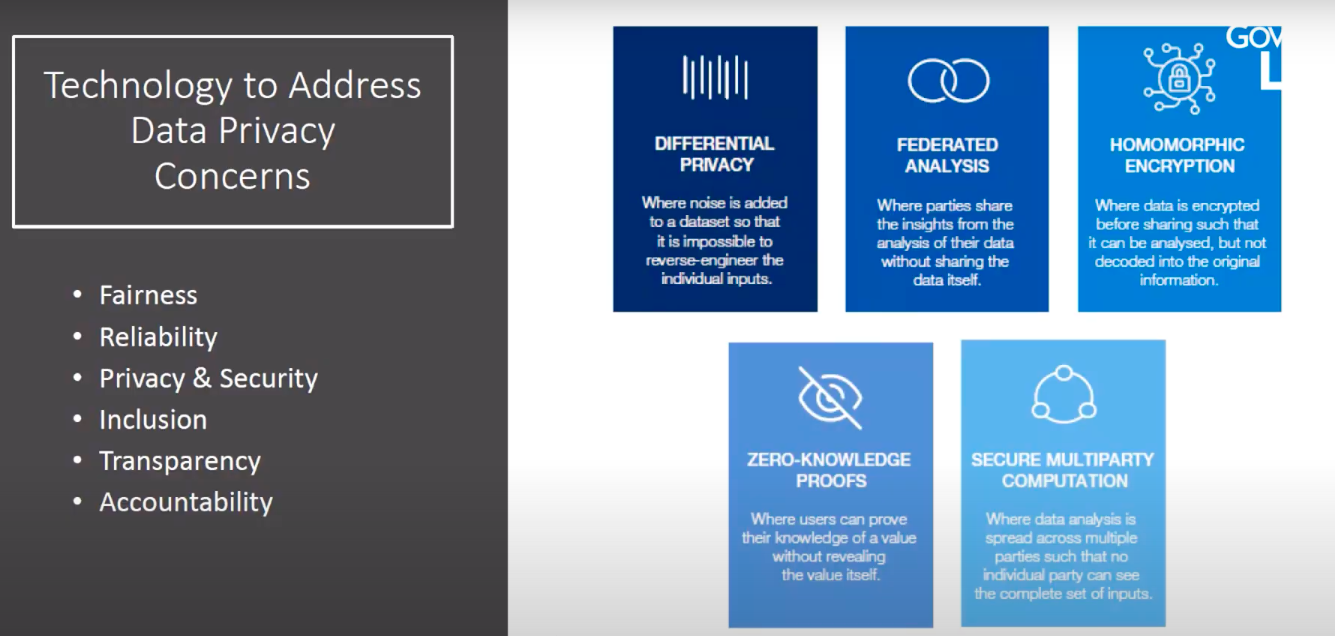
Be cognizant of data sharing and privacy trade-offs
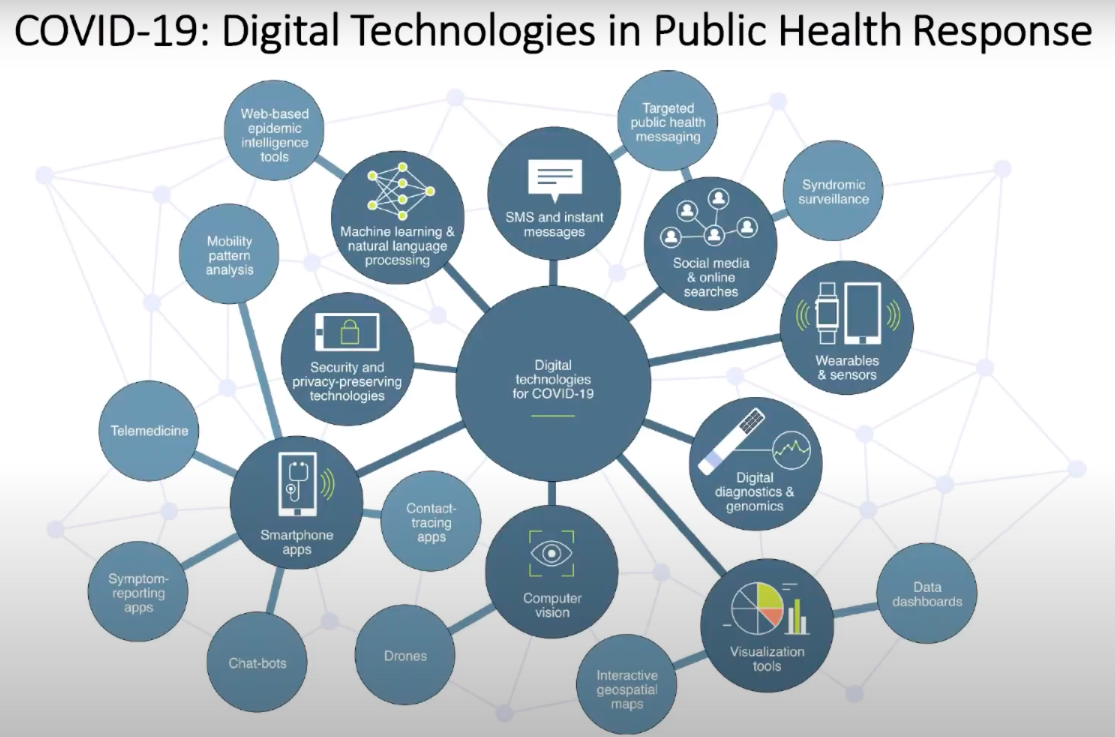
Covid-19: Digital Tech in Public Health Response
Technology to address data privacy concerns
D. Panel Discussion
Self-sovereign ID for trust: what does that mean and why is it important?
Jaimie Boyd: We need to collaborate on the internet in trusted ways. Mostly, we use sign-ins (like those given by big-tech providers). That has its limits. But is not appropriate for things like tax filings or health platforms.
Government of British Columbia has started to combine everything in a single digital identity card in order to create a unified Digital Identity. You control the access to the information about you. You choose what different government ministries can see about you and what they can not
How has Singapore built a structured approach to creating a data policy? How did they build public trust?
Quek Su Lynn: Data policy builds on what Singapore has had for a while and builds on top of what they have so far. 3 components:
- Figure out the objective of what you want achieve
- Put the right pillars into place (tech, process, infrastructure, capabilities)
- Work out execution strategies
There's a LOT of engagement with public agencies. Most agencies see data as their data. There isn't as much appetite to share (risk and ownership). Had to do a lot of consensus building and start with quick wins. Didn't try to execute a big bang approach. Even though they had an ambitious policy, execution started with baby steps
For building public trust, gave a lot more information to the public about what they're doing and how they're managing data. Data protection policies also helped a fair bit.
"Data for good" – what is an example of this in public service?
Lesly Goh
In the developed world: Smart cities, public safety and awareness, traffic information
In the developing world: Tracking conflicts/violence, tracking droughts and food security issues
Key principles for using data in public service
Ramkannan A of NCS: There's going to be a lot of different kinds of data. 3 guiding principles to deal with this:
- Data Profiling: what are the right sets of data that are useful for your particular use case?
- Data Security: has to be done at a very granular level
- Data Stewardship