2U Buys edX for $800M, In Surprise End to Nonprofit MOOC Provider Started by MIT and Harvard | EdSurge News
Postmodern Studio / Shutterstock
When MIT and Harvard University started edX nearly a decade ago, it was touted as a nonprofit alternative to for-profit online course providers. Today, the universities announced that they are selling edX to one of those for-profit providers for $800 million.
edX had fallen behind rivals like Coursera, a similar platform founded by Stanford University professors, in fundraising and reach, though it still boasts 35 million users and more than 3,000 courses.
Leaders of edX cited the pandemic as a factor that led to the sale. “Covid drove an explosion in remote learning, which spurred huge investments into edX’s commercial competitors,” wrote MIT’s president L. Rafael Reif, in an open letter today. “This put edX, as a nonprofit, at a financial disadvantage. This new path recognizes this reality and offers a solution that allows edX to continue to support and maintain the key aspects of its mission.”
What happens now is a bit complicated.
2U, a so-called Online Program Management company that helps traditional colleges start and run online degree programs, says it will operate edX as a separate subsidiary that will be structured as a public benefit corporation. That means it will be for profit.
Meanwhile, the $800 million that 2U is paying for the assets of edX will be used to create a new nonprofit, as yet unnamed, that will maintain the open-source platform on which edX runs, called Open edX. The nonprofit will also “explore promising new ideas for making online learning more effective, engaging and personalized,” said Reif in his letter.
Anant Agarwal, founder and CEO of edX, said at a webinar for the media on Tuesday that he initially “had some misgivings” when 2U approached him about a possible acquisition. But he said that 2U’s co-founder and CEO Chip Paucek started the conversation by asking what was important about being a nonprofit and made assurances that that DNA would be preserved.
In the end, 2U officials said in a statement that they have pledged to:
- Guarantee affordability through the continuation of a free version of online courses
- Protect the intellectual property rights of faculty and universities that contribute courses
- Protect the privacy of individual data for all learners who use the edX platform
- And contribute to the ongoing development of the open-source Open edX platform that the universities will continue to oversee.
There will be no immediate changes for partner colleges that have been offering courses on edX, since the company said it will honor their current arrangements and contracts with all partners.
One question, though, is whether all the existing university partners will choose to continue with a 2U-owned edX once their contracts come up for renewal, since many colleges have said they chose to work with edX because of its nonprofit status.
When EdSurge asked Paucek what he is doing to convince colleges to stay, he said the company has long believed that “universities are in control, 2U is not” when it comes to any partnerships with the company. “We have to do right by the stakeholders every single day,” he added.
The deal is a sign that the once-distinct lines between MOOCs, online degree programs and on-campus programs have blurred, argues Sean Gallagher, founder and executive director of Northeastern University’s Center for the Future of Higher Education and Talent Strategy.
For me, the big story here is this continued consolidation of market leadership in online learning,” he added. “Scale matters, and the big are getting bigger.”
Phil Hill, an edtech consultant and blogger, said that even though edX grew during the pandemic, it lacked a clear direction.
“They’ve never had a real strategy behind them, and they needed to do something,” he said of edX. “2U is all about strategy,” he added.
It appears, though, that the new arrangement means that officials at MIT and Harvard are no longer in the driver's seat when it comes to the online learning platforms that they built.
Any impact they want to make to drive the direction of online education must now come from the new nonprofit they’ll be running with the proceeds from the sale, or other efforts.
As an investment, the $30 million each that Harvard and MIT contributed in 2012 did pay off.
“It’s just like with university endowments,” said Hill. “These guys know how to make a ratio on their money. They’re good at making money, and they did it again.”
Jeffrey R. Young (@jryoung) is the managing editor of EdSurge. He can be reached at jeff [at] edsurge [dot] com
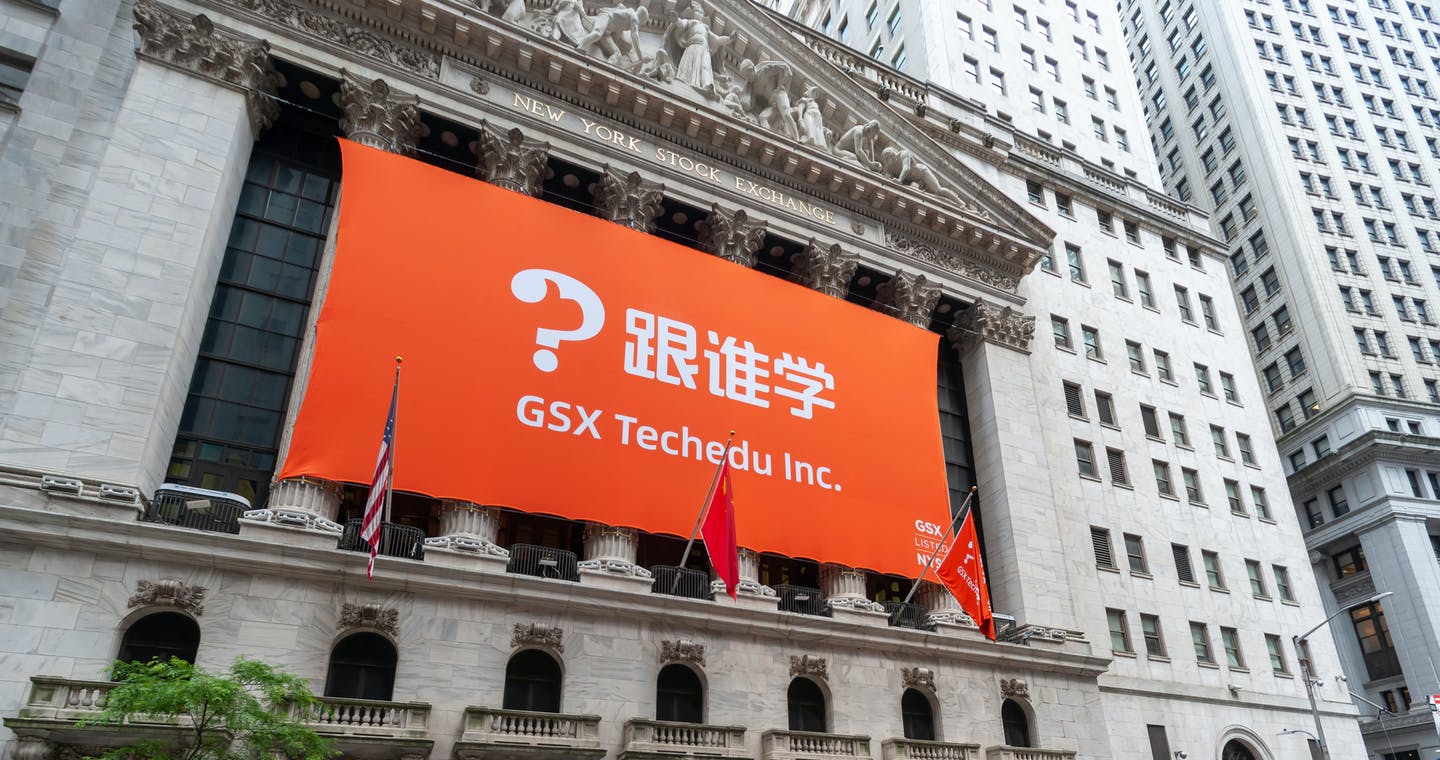


In 2019, the New York Stock Exchange was decorated for the first day of trading for GSX Techedu Inc.
China’s ballooning edtech market is suddenly deflating thanks to new government restrictions on lucrative private tutoring companies that serve millions of the country’s children.
In mid-July, China’s government issued new regulations that drastically limit for-profit tutoring services and prohibit foreign investment in Chinese private education companies, reports Reuters.
The new rules restrict both tutoring services and the profits they generate. They limit online lessons to 30-minute sessions; impose a tutoring curfew of 9 p.m; and prohibit instruction during weekends, holidays and school breaks. Companies that offer private instruction in core subjects will have to register as nonprofits and will no longer be able to raise investment capital through IPOs or advertise their programs.
There seem to be multiple motivations for the policy shift. State-sponsored news sources describe the moves as a way to ease the pressures children feel and the financial burdens parents face in a society that prizes intense pursuit of academic achievement. That rationale fits with a suite of new policies the Chinese government has recently issued to encourage couples to have more children and therefore reverse the country’s declining birth rate.
But the crackdown on edtech also seems in line with another recent pattern in China—of a government seeking to “exert more direct influence over the private sector,” according to New York Times coverage from earlier this summer. This “clampdown on tech” has coincided with the resignation, detention and even disappearance of leaders of some leading Chinese internet companies.
Repercussions are already being felt by China’s private tutoring industry, worth an estimated $120 billion, per Reuters. Hong Kong stocks have fallen as investors sell off edtech holdings, reports South China Morning Post, and Chinese stocks listed in the U.S. have also taken hits.
The market had swollen so significantly because millions of middle-class Chinese families have been willing to invest large shares of their incomes to prepare their children to perform well on the National College Entrance Examination, known as the Gaokao, and the Senior High School Entrance Examination, known as the Zhongkao, according to a 2019 report published by RTI International and the Omidyar Network. The report pegged the average parental spending on education over the course of a child’s K-12 school experience at more than $40,000.
“Anything the parents can do to give their kids an edge, they’re going to do,” Mike Michalec, one of the report authors who works as managing director of advising firm EdTech Asia, told EdSurge in an interview.
Some successful tutoring companies started out offering instruction in person, but lately have focused on growing their online offerings, according to Michalec. That has made them more accessible and affordable to more families.
Online tutoring tools have also made it possible for companies to hire tutors from outside of China who are native English speakers. But the new government rules prohibit “overseas education courses” and also ban hiring foreign teachers who live overseas, reports JMDEDU, a Chinese education technology news outlet.
Major tutoring companies have pledged to adhere to the new policies, reports Bloomberg.